

Meningitis - B. Pharma 2nd Semester Pathophysiology notes pdf
Meningitis
Content
• Meningitis
• Etiopathogenesis
• Clinical features
• Diagnosis
Objective
At the end of the class the students will be able to
• Define meningitis
• Difference between pachymeningitis,leptomeningitis
• Discuss the etiology, pathogenesis and clinical Acute Pyogenic Meningitis, Chronic (Tuberculous and Cryptococcal) Meningitis,
Meningitis
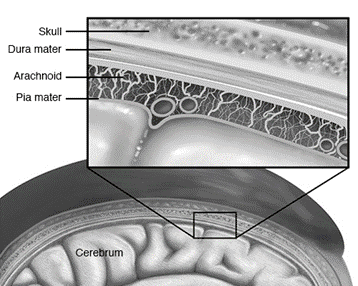
It is inflammatory involvement of the meninges.
• Meningitis may involve the dura called pachymeningitis,
• leptomeninges (pia-arachnoid) termed leptomeningitis
• Pachymeningitis: inflammation from chronic suppurative otitis media or from fracture of the skull.
• Extradural abscess may form by suppuration between the bone and dura- penetrate the dura and form a subdural abscess.
Leptomeningitis, commonly called meningitis- infection
• Infectious meningitis is broadly classified into 3 types:
1. acute pyogenic,
2. acute lymphocytic (viral, aseptic)
3. chronic (bacterial or fungal)
Acute Pyogenic Meningitis
• Acute pyogenic or acute purulent meningitis is acute infection of the pia-arachnoid and of the CSF enclosed in the subarachnoid space.

ETIOPATHOGENESIS-Acute Pyogenic Meningitis
Causative organisms vary with age of the patient
- Escherichia coli
- Haemophilus influenzae
- Neisseria meningitidis
- Streptococcus pneumoniae
• routes of infection as follows:
1. Most commonly by the blood stream.
2. From an adjacent focus of infection.
3. By iatrogenic infection such as introduction of microorganisms at operation or during lumbar puncture.
Symptoms of Meningitis

CLINICAL FEATURES AND DIAGNOSIS of MENINGITIS
Acute bacterial meningitis is a medical emergency.
• The immediate clinical manifestations are fever, severe headache, vomiting, drowsiness, stupor, coma, and occasionally, convulsions
• The diagnosis is confirmed by examining CSF
1. Naked eye appearance of cloudy or frankly purulent CSF.
2. Elevated CSF pressure (above 180 mm water).
3. Polymorphonuclear neutrophilic leucocytosis in CSF(between 10-10,000/μl).
4. Raised CSF protein level (higher than 50 mg/dl).
5. Decreased CSF sugar concentration (lower than 40 mg/dl)
6. Bacteriologic examination by Gram’s stain
Acute Lymphocytic (Viral, Aseptic) Meningitis
• Acute lymphocytic meningitis is a viral or aseptic meningitis, especially common in children and young adults.
• Etiologic agents are numerous viruses such as enteroviruses, mumps, ECHO viruses, coxsackie virus, Epstein-Barr virus, herpes simplex virus-2, arthropode-borne viruses and HIV
• viral meningitis has a benign and self-limiting clinical course of short duration and is invariably followed by complete recovery
Chronic (Tuberculous and Cryptococcal) Meningitis
• There are two principal types of chronic meningitis—bacterial (tuberculous meningitis) and fungal (cryptococcal meningitis)
• Tuberculous meningitis occurs in children and adults through haematogenous spread of infection from tuberculosis
• Cryptococcal meningitis develops particularly in debilitated or immunocompromised persons, usually as a result of haematogenous dissemination from a pulmonary lesion
CLINICAL FEATURES AND DIAGNOSIS
• Tuberculous meningitis manifests clinically as headache, confusion, malaise and vomiting

Summary
• Meningitis is inflammatory involvement of the meninges
• Acute pyogenic or acute purulent meningitis is acute infection of the pia-arachnoid and of the CSF enclosed in the subarachnoid space
• Acute lymphocytic meningitis is a viral or aseptic meningitis, especially common in children and young adults.
• There are two principal types of chronic meningitis—bacterial (tuberculous meningitis) and fungal (cryptococcal meningitis)

0 Comments: